Over 300 companies trust Carl Media Removal. Get a Quote Now >
How to report defamation on social media?


Information on social media can turn into a problem if you don’t know the steps or solutions to manage it and remove those harmful posts.
That is why there are methods you can apply both on each platform and social network and through legal channels to sue anyone who is harming you on social media.
This guide brings together the concrete actions you can take to respond to defamation, understand your rights, and protect your reputation.
What does it mean to “defame” a person?
Defaming a person means making false accusations about their reputation, character, or conduct with the intention of damaging their public image.
In essence, defamation involves communicating false allegations that do not match reality and that can cause significant harm to the victim.
These false statements are spread knowingly, aware that they are inaccurate or without caring whether they are.
Differences between “defamation”, “libel”, and “slander”
Although these three terms are often used as synonyms, in the legal field they carry very different nuances that are essential to understand in order to properly protect your reputation on social media.
- Defamation is the umbrella term for any false statement of fact, communicated to others, that negatively affects a person’s reputation, regardless of the medium used.
- Libel, for its part, is defamation that appears in a fixed or published form, such as a written post, an article, an image, or a recorded video.
- Slander is defamation expressed in a spoken or transient form, such as a comment made out loud during a live stream or a voice message.
Comparison table: Differences between defamation, libel, and slander
So you can clearly see the differences between these three concepts, here is a table with an explanation of each one:
| Aspect | Defamation | Libel | Slander |
|---|---|---|---|
| Nature of the attack | Umbrella term for a false statement of fact that damages someone’s reputation | Defamation expressed in written or published form, such as posts, articles, or images | Defamation expressed in spoken or transient form, such as live audio or voice notes |
| Falsehood requirement | Yes, the statement must be a false statement of fact; truth is a complete defense | Yes, it must be false; a true written statement is not libel | Yes, it must be false; a true spoken statement is not slander |
| Typical format | Any medium: written, spoken, audiovisual | Written, posted, recorded, or otherwise fixed content | Spoken words, live audio, transient statements |
| Examples on social media | Posting that someone scammed customers (when false), sharing fake news about a person, false comments on posts | A false written post, a fabricated screenshot, an edited image or caption claiming criminal conduct | A false accusation made in a live stream, a voice note, or an audio clip |
| Permanence of the damage | Depends on the medium; permanent if recorded, temporary if only spoken | Usually permanent, since the content is fixed and can be reshared | Often temporary, unless the audio is recorded or reposted |
| Legal severity | Treated as a civil wrong that the victim can sue over | Generally treated as more serious, since harm is often presumed | Usually requires proof of specific harm, unless it qualifies as slander per se |
| Proof of harm required | Depends on the type and on whether the plaintiff is a public or private figure | Often presumed when the statement is defamatory on its face | Typically must be proven, except in slander per se cases such as accusing someone of a crime |
| Legal consequences | Civil lawsuit and monetary damages; rarely criminal in the United States | Civil damages, which can be significant when reputational harm is clear | Civil damages, generally tied to the specific harm the victim can prove |
How the medium used to communicate the defamation determines its severity
Under U.S. law, statements that are written, posted, recorded, or broadcast are generally treated as libel, which courts tend to view as more serious defamation, especially when the content is fixed and can be reshared.
Libel, which is defamation in a permanent form, receives harsher legal treatment than slander, which is purely spoken defamation. This includes news articles, posts on informational pages, social media posts, comments, reviews, manipulated images, and any content recorded in a permanent format.
What is the reason the severity is different?
The reason is simple, and it is that written or recorded content persists over time and can be shared, republished, and viewed by thousands of people without the author being able to control it.
In contrast, false accusations made verbally in a casual conversation are usually considered less serious, although they can still be grounds for a defamation claim.
However, if that verbal conversation is recorded or reproduced publicly, the situation changes radically.
What does “defamation” mean on social media?
On social media, it can be said that defamation exists when someone posts, shares, or spreads false information about another person with the intention of damaging their prestige, credibility, or honor.
The main difference compared to other media lies in the speed of spread and the massive reach that social networks have.
For example, a defamatory comment posted on Facebook, Twitter, Instagram, or TikTok can reach thousands of people in a matter of minutes, exponentially multiplying the damage to the victim’s reputation.
Facts over opinions: what is considered defamation on social media
Distinguishing between facts and opinions is crucial because, legally speaking, not everything posted on the internet constitutes a crime of defamation, even if it is offensive or unpleasant for the person who receives it.
When we talk about defamation on social media, we are specifically referring to those statements that are presented as verifiable facts and that, in addition, are false.
On the other hand, if someone says “in my opinion, this person acts dishonestly”, they are expressing their personal view, which has different protection at the legal level.
Expressions of opinion, even when they are unpleasant, hurtful, or completely unfair in your view, have greater legal protection than false assertions of fact.
Examples of defamation on social media
Some examples of defamation can be:
- Posting content claiming that a company has scammed its customers intentionally, without evidence or a ruling that proves it.
- Writing comments on social media accusing a professional of having committed fraud, negligence, or illegal conduct.
- Sharing a video that attributes criminal, violent, or dishonest behavior to a person that never actually happened.
- Spreading screenshots, edited images, or manipulated conversations to make people believe that someone said or did something that did not actually happen.
- Creating public posts, stories, or messages accusing a person or business of selling fake products, operating illegally, or deceiving their customers.
On the internet and legally, it is not the same to say that a service was bad or that an experience was negative as to falsely claim that a company commits crimes, scams customers, or acts illegally.
Can deepfakes and AI-generated content be considered defamation on social media?

The answer is yes, although with some important nuances you should know.
For a deepfake or AI-generated content to be considered defamatory, it must meet the same requirements as any other form of defamation: asserting false facts about a person that damage their reputation, and having those facts transmitted to third parties through social media.
Recommended steps to report someone for defamation on social media
To report a person for defamation on social media, you need to act in an orderly, careful way and with sufficient evidence.
These are the recommended steps to report defamatory content on social media, gather evidence correctly, and use the official channels of each platform before considering a possible legal route.
Gather evidence
The first step before reporting defamation on social media is to stay calm, avoid acting impulsively, and gather all possible evidence.
For this, it is important to take full screenshots showing the defamatory content, the profile name, the publication date, the comments, the interactions, and the URL of the post if available.
In the case of videos, live streams, or temporary stories, it is advisable to record the screen to preserve the content before it disappears. It is also useful to save links, usernames, negative reviews, profile identifiers, relevant comments, related private messages, and any data that helps prove the spread of the content.
Locate and contact the author of the defamatory post
Once the evidence is gathered, the next step is to try to identify who is behind the defamatory post.
If the author is identified and there is a reasonable way to contact them, you can send a brief, polite, and firm message requesting the removal of the content. The message should explain that the post contains false or unverified statements, that it is causing reputational harm, and that its removal or correction is being requested.
Use the forms of each social network
Each social network has its own forms, policies, and internal processes for reporting defamatory, abusive, or harmful content.
Although the concept of defamation can vary depending on the platform and the country, many networks allow you to report posts for harassment, false information, impersonation, manipulated content, privacy, harmful speech, or infringement of rights.
Report defamation on X

On X, defamation can appear in posts, replies, threads, mentions, or accounts created to attack a person, company, or professional, and malicious posts may go against the platform’s policies and terms of use.
So, you can start the report from the post itself or use the official center of X forms in the Help Center, where the platform lets you select the type of problem and complete a request with more details.
Report defamation on Instagram
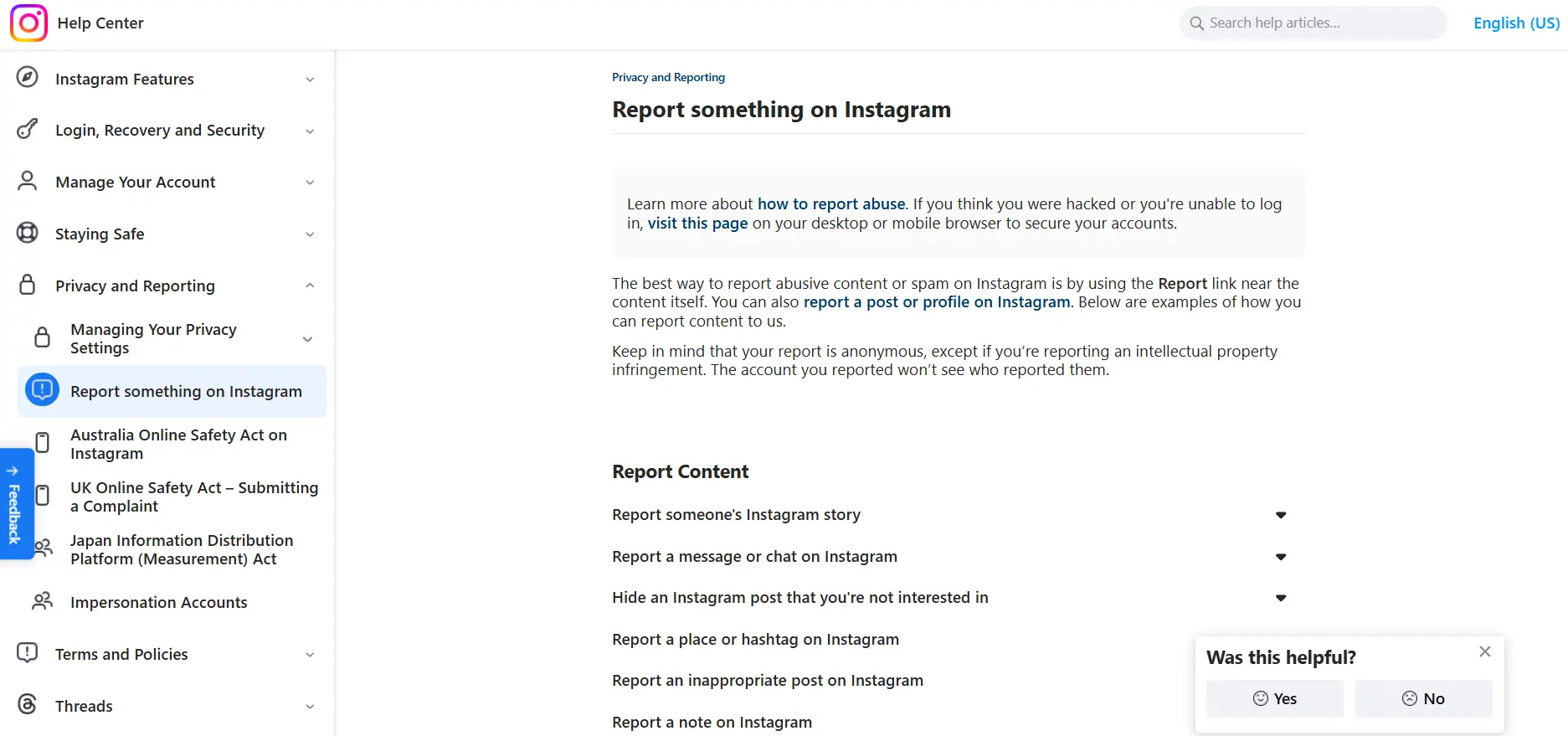
On Instagram, before reporting, it is advisable to identify whether the case fits better as harassment, bullying, impersonation, privacy, manipulated content, or false information.
The report can be made from the app itself, although you can also use forms from the Instagram Help Center when the case requires more context or evidence.
Report defamation on Facebook
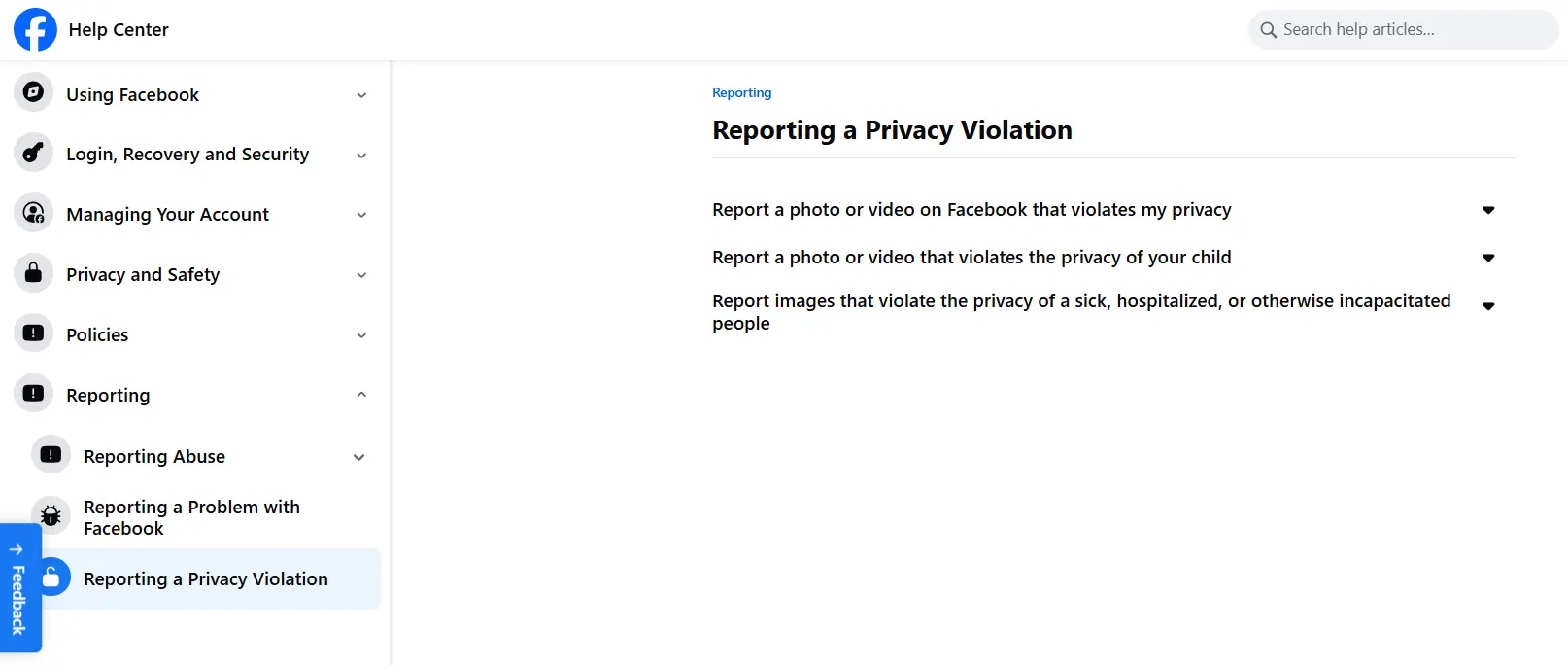
On Facebook, a defamatory post can appear on profiles, pages, groups, comments, reviews, or shared posts. If the content falsely attributes crimes, scams, illegal conduct, or serious acts, it is important to explain it clearly in the report.
You can report the content directly from Facebook or go to the official form when the case requires a more formal request.
Report defamation on YouTube
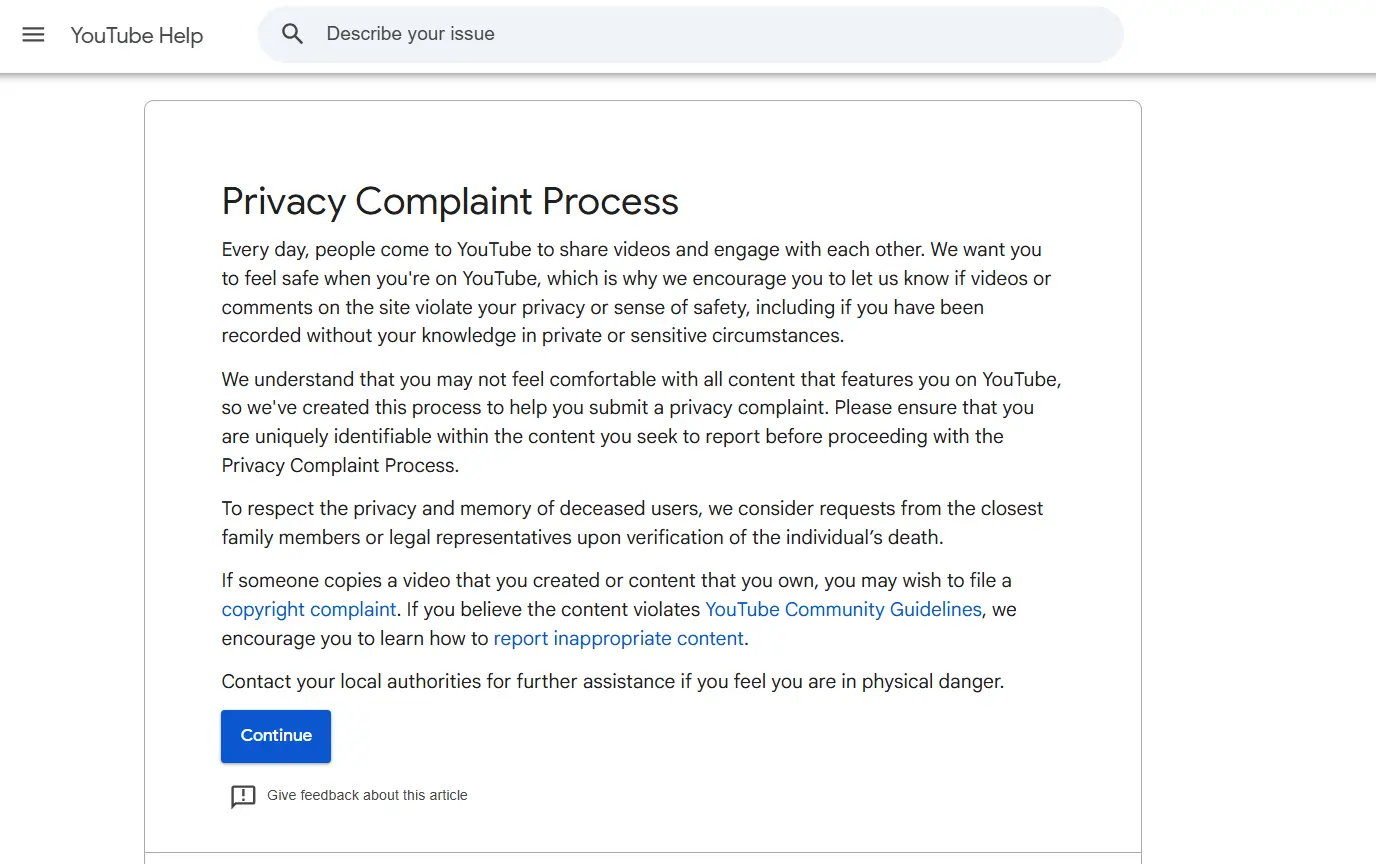
On YouTube, defamation can be inside the video, in the title, the thumbnail, the description, the comments, or even in specific parts of the content. If the video contains false accusations, you can indicate the exact minutes where those statements appear.
YouTube offers options to report videos from the platform and also legal forms for certain cases of defamation or privacy.
Report defamation on TikTok
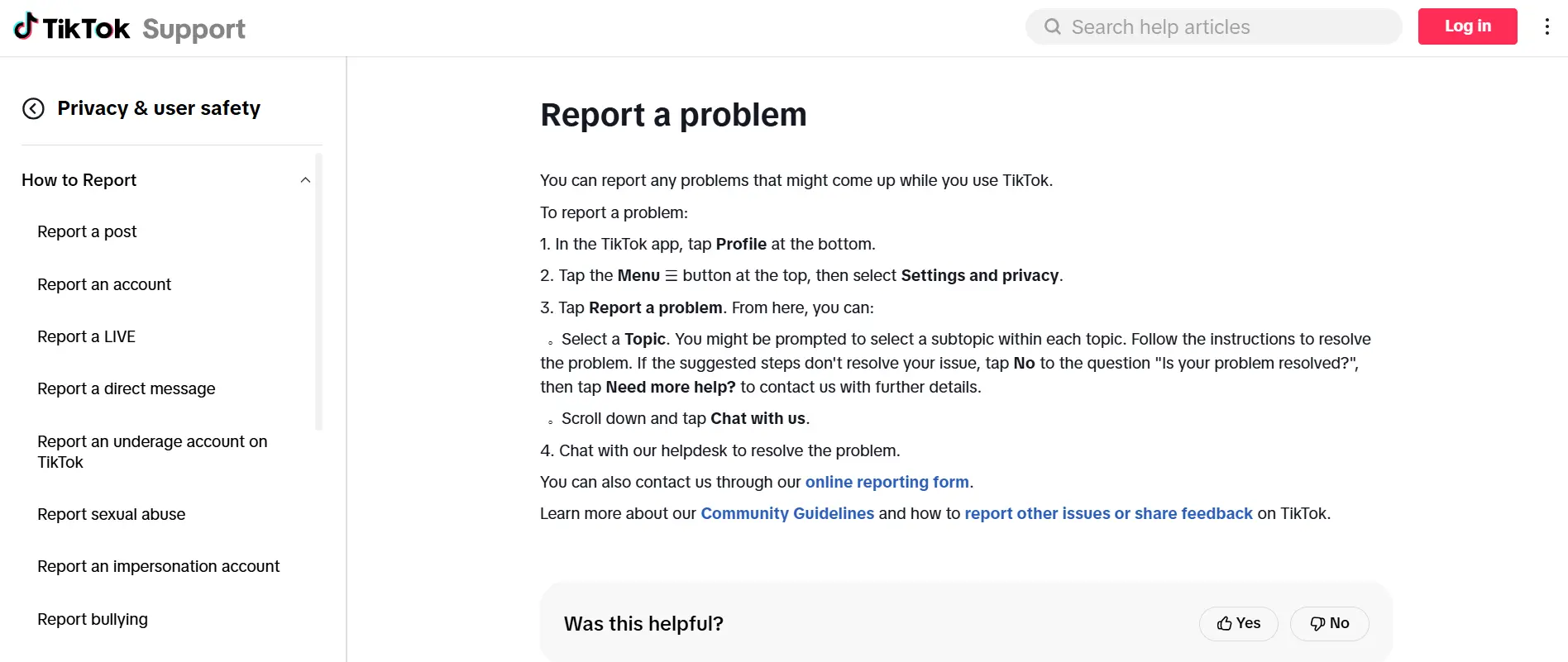
On TikTok, defamation can go viral quickly through videos, overlaid text, live streams, comments, duets, or posts that take information out of context. If the content falsely accuses a person or company, it is best to report it as soon as possible and save evidence.
You can report from the app itself or use TikTok’s official center, which includes options to report posts, accounts, comments, live streams, messages, and other content:
As a last resort, you can take legal action over the defamation
If the platform does not remove the content, the author refuses to correct it, or the post has caused serious harm, you can consider taking legal action.
In these cases, the most advisable thing is to consult a lawyer or reputation experts specialized in defamation, libel and slander, online reputation, privacy, or content removal.
Consequences of committing defamation in the United States

In most cases, defamation is a civil matter resolved through monetary damages rather than criminal fines. A person found liable for defamation can be ordered to pay the victim compensation that ranges from modest amounts to substantial sums, depending on the case.
This depends on various factors such as the seriousness of the defamatory statements, the reach of the spread, whether the victim is a public or private figure, and whether the person acted with actual malice.
Does a person who has been a victim of defamation have the right to compensation?
Yes, a person who is a victim of defamation on social media has every right to request compensation for the damages suffered.
Compensation is not automatic, but U.S. law allows the victim to file a civil lawsuit and claim financial compensation for the harm suffered.
Recommendations for dealing with defamation situations on social media
To deal with a reputational crisis on social media or information, you can keep this recommendation in mind.
- Do not react impulsively and publicly.
- Gather all the necessary evidence, such as screenshots, replies, comments, image metadata, everything possible.
- Report the content on the platform, as we mentioned earlier, on each social network.
- Consult a specialized lawyer or a reputation company for information, or a content removal and online reputation company.
- Monitor how the case evolves, checking whether the content is replicated on other accounts, platforms, or Google results, and documenting any reputational or financial harm.
Conclusions and final recommendations for reporting defamation on social media
Facing content that damages your reputation on social media can create frustration and a sense of helplessness, but it is important to know that there are clear ways to respond.
Before taking any step, remember that you can save evidence, contact the author when possible, and use the official forms of each social network, actions that add strength to your case.
And if the content persists or the harm is serious, you can always consult professionals specialized in honor and online reputation so that you can get support in resolving any defamation situation on the internet.
Reputation is built with time and effort, so defending it with the right tools is a sensible decision.
If you feel that the defamation is spreading or you don’t know where to start, at Carl Media Removal we can support you in the process of managing and removing the negative content that affects your reputation.
We are here to help you recover your reputation, with the backing of those who understand how delicate these cases are.

Take back control of your online reputation We can review your case and offer a personalized solution to help you take back control of what’s being said about you or your business online. Get a quote in less than 24 hours
 Subscribe to our newsletter
Reputation insights and industry news from the Carl Media Removal team, straight to your inbox. No spam, unsubscribe anytime.