Over 300 companies trust Carl Media Removal. Get a Quote Now >
What do the Trustpilot labels “Merged”, “Redirected”, and “Invited” mean?


The labels that appear next to some Trustpilot reviews may look like minor details, but they actually provide important information about where an opinion comes from.
These labels become especially relevant when any business receives a negative comment and wants to report it, manage it, or try to remove it.
On Trustpilot, not all reviews share the same context: some are posted spontaneously, others arrive after an invitation sent by the company itself, others come from links placed in the company’s own channels, and others come from profiles that were combined.
Each case carries different implications for reputation, the TrustScore, and a possible management strategy.
What are Trustpilot labels and why do they appear on some reviews?
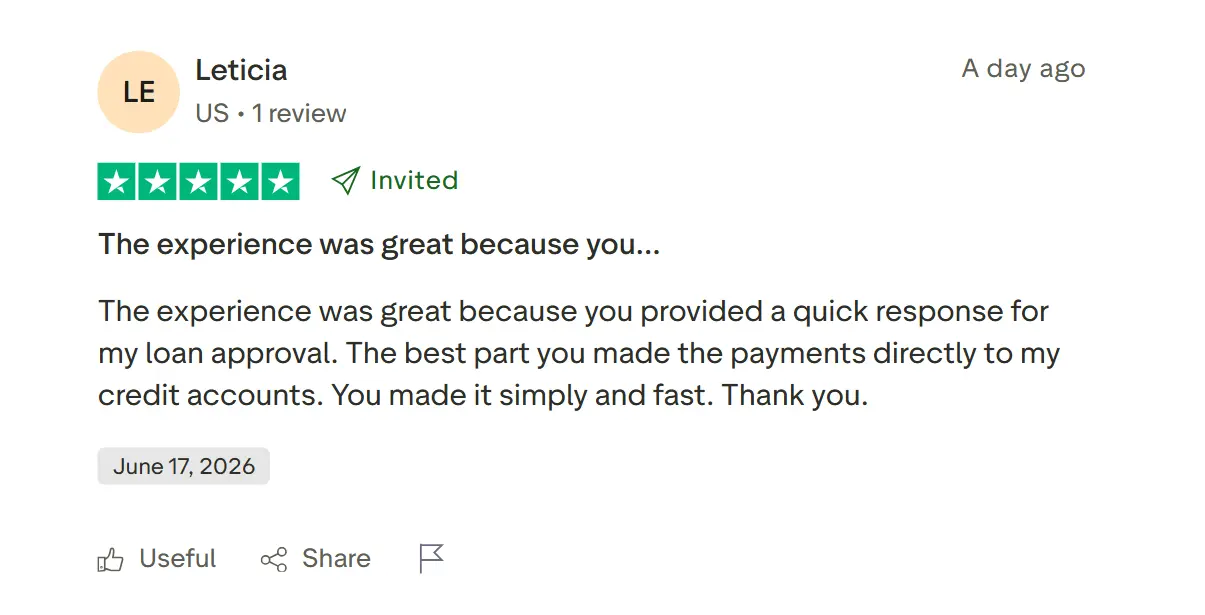
Trustpilot labels are visible marks that the platform adds to certain reviews to indicate how they were created or where they come from.
Since Trustpilot is an open platform where any user can leave an opinion, it distinguishes between spontaneous reviews and those that arrived after an invitation, a redirect, or an internal process.
Trustpilot explains these labels in its own documentation on review labels, where it distinguishes between invited, redirected, verified, and other types of origin.
What information do these labels give to the user reading the review?
When someone reads a labeled review, they get a hint about its origin.
So, a user can tell whether the person wrote on their own initiative, whether the company invited them to review, or whether they reached the profile through another process.
A spontaneous review is usually perceived as more independent, while an invited review shows that the company took part in requesting that rating.
What does the “Merged” label mean on a Trustpilot review
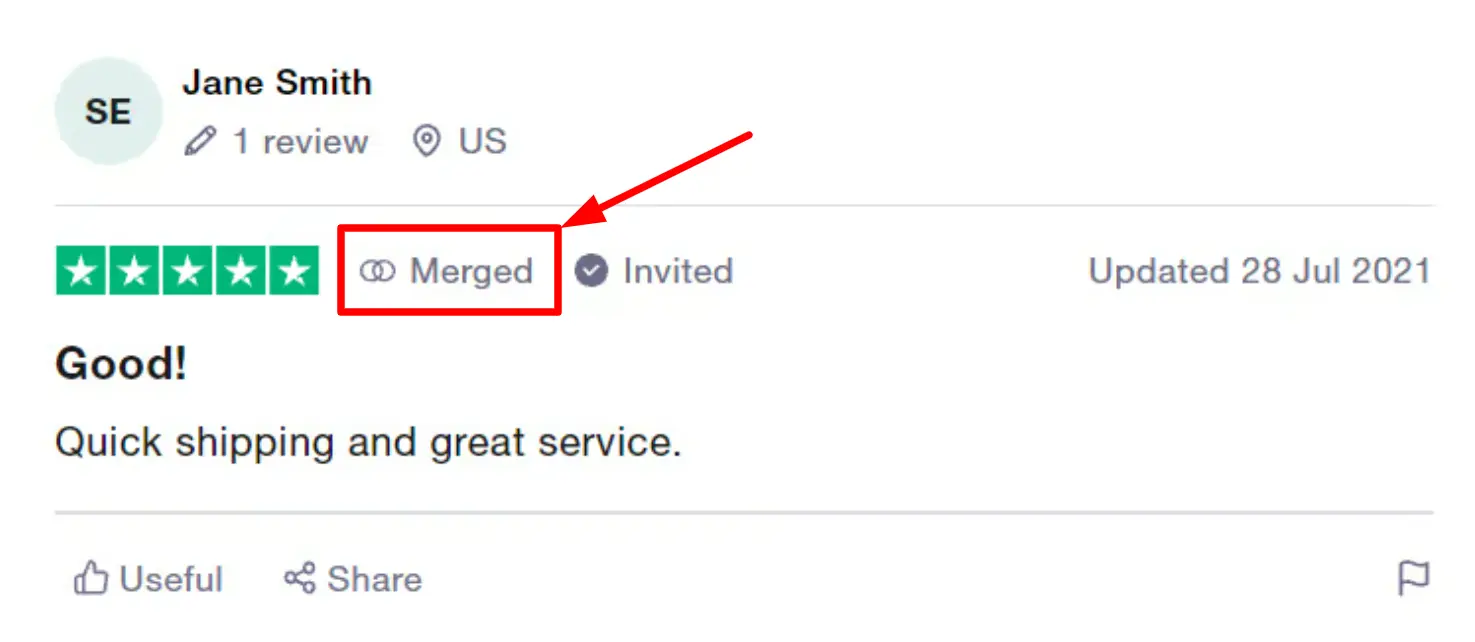
The “Merged” label means the review was merged in, and it appears when a review comes from another Trustpilot profile that was combined with the profile you are viewing.
That opinion was not originally written on that profile, but on another one the company decided to combine.
If you hover over the icon, you can see which profile the review came from. Trustpilot also explains this process in its guide on merged business profiles.
What happens when Trustpilot combines several profiles or domains of the same company?
This process is directly tied to the “Merged” label.
Trustpilot lets a company with multiple profiles combine them into one, and when that happens, the reviews coming from the merged profiles may appear marked as “Merged” on the main profile.
This usually happens in specific situations, such as these:
- Multiple domains that redirect to a main one or that have identical content.
- A name or brand change, where the old domain redirects to the new one.
- The purchase or absorption of another business.
When profiles are merged, the reviews are combined under the main profile and the other profiles stop being available.
It’s a good idea to be clear about this before taking the step of merging profiles, because it is permanent (it cannot be reversed).
How a “Merged” review affects the TrustScore and the perception of the profile
When profiles are merged, the main profile’s TrustScore is recalculated with all the combined reviews.
This means that the opinions from an old profile start to influence the current score.
The effect depends on the content you carry over. In other words, if the secondary profile had many negative reviews, moving them can hurt or dilute a good TrustScore.
That’s why, before merging profiles, it’s worth reviewing what reputation you’re bringing into the main profile.
What does “Redirected” mean on a Trustpilot review
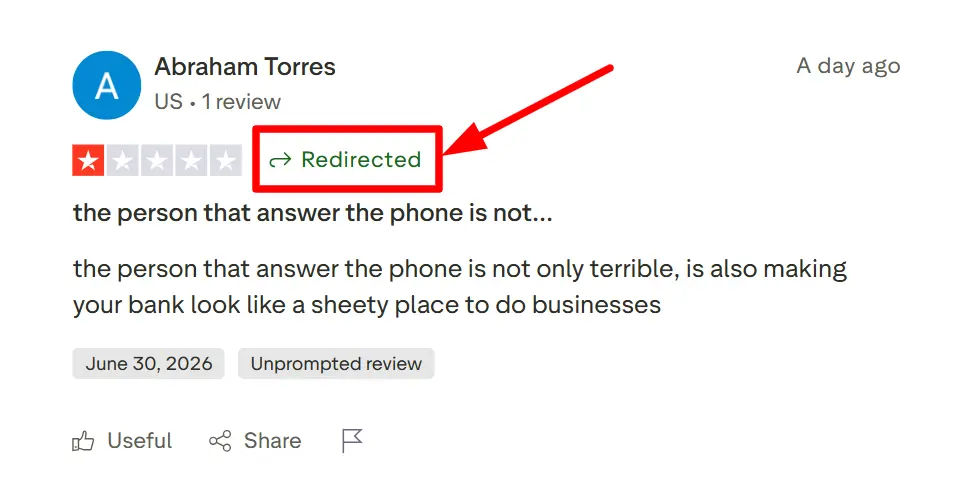
The “Redirected” label means the review was redirected, and it appears when the user reached the profile through a link published by the company itself, like a button on their website.
The review is written directly on the profile, but the user did not arrive on their own, they were guided by the brand.
This does not make it any less valid; it simply indicates the path they followed to leave the opinion.
Difference between a redirected review and a review left directly on the profile
A review left directly is written by someone who entered Trustpilot on their own, looked up the company, and posted their opinion without any link or invitation involved.
By contrast, a redirected review happens when the user clicks a link the company placed on its website or another of its own channels.
What does “Invited” mean on a Trustpilot review
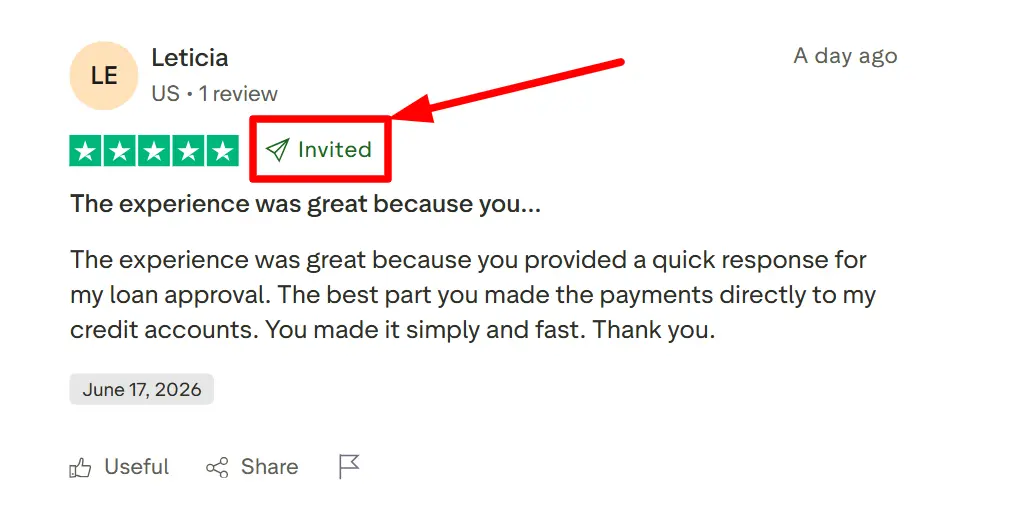
The “Invited” label means the review was invited, and it appears when the company requested the review, usually through a manual invitation or through its own management system.
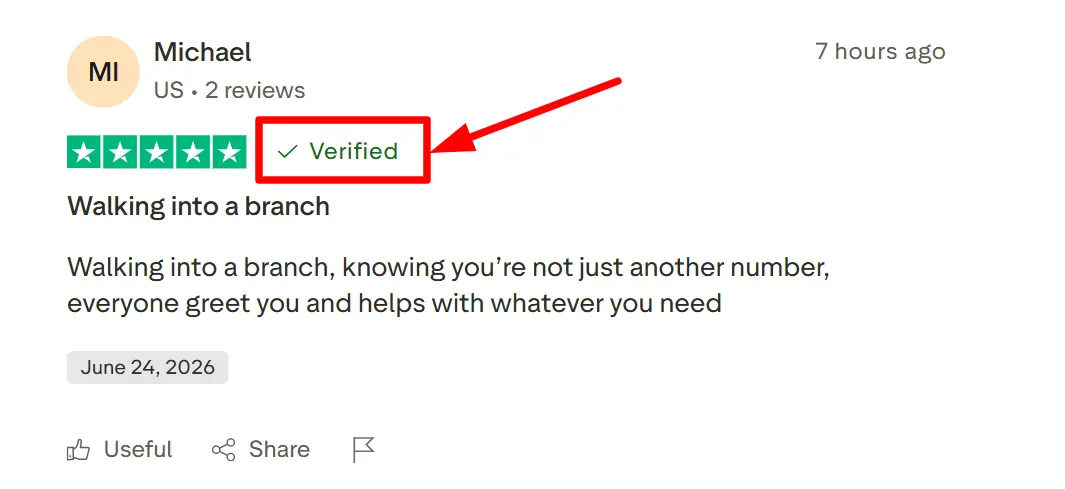
It shouldn’t be confused with “Verified” reviews, which are generated with Trustpilot’s automatic invitation tools and are tied to a specific transaction. Trustpilot explains this difference in its article on verified reviews.
The problem with invited reviews when the content is negative
Inviting customers to review can be a useful practice, but it gets complicated when that invitation ends up generating a negative review that stays published.
Many companies send invitations in bulk, without weighing the timing or the customer’s level of satisfaction, and a dissatisfied user gets the perfect nudge to leave a harsh criticism.
That way, the company itself can unintentionally trigger the review it later tries to remove.
Why an “Invited” review can be harder to remove
When you invite a customer to review, you implicitly acknowledge that they had a real experience with your business.
That complicates any removal attempt based on the author not being a genuine customer.
For that reason, a negative review with an “Invited” label usually offers fewer angles for a claim.
Unless it breaks a Trustpilot rule, such as including insults, personal data, false accusations, or disallowed content, you’ll have little room to request its removal.
Differences between organic, invited, redirected, and merged reviews
Although they all appear on the same profile, they have different origins. Understanding how they differ helps you read any profile with more judgment.
| Review type | How it originates | Company involvement |
|---|---|---|
| Organic | The user reviews on their own initiative, without an invitation | None |
| Invited | The company requests the review manually or with its system | High |
| Redirected | The user reaches the profile from a company link | Medium |
| Merged | The review comes from another profile merged with the current one | Indirect, through the merge |
How these labels affect review removal on Trustpilot
Trustpilot only takes down reviews that break its rules, not the ones that are simply critical, negative, or uncomfortable.
So, some labels make a claim especially complicated, for example:
- An “Invited” review leaves little room to argue that the author wasn’t a customer, because it was the company itself that invited them to review.
- Organic reviews can give a bit more margin; since there is no invitation or linked transaction, there is more room to question whether the author had a genuine experience, as long as there is reasonable evidence.
Every request goes through Trustpilot’s Content Integrity Team at Trustpilot, which assesses whether the review breaks the rules and decides whether to keep it, ask for it to be modified, or take it down.
While it’s being investigated, the review usually stays visible, unless it involves harmful, illegal, or especially sensitive content.
Common mistakes when managing reviews with labels on Trustpilot
These are some common mistakes people tend to make when managing their Trustpilot profile without taking the review labels into account:
- Using automatic invitations without any criteria, also inviting dissatisfied customers who could leave criticism that’s hard to take down.
- Trying to remove a review without first analyzing its label, which usually ends in an almost certain rejection.
- Claiming the profile expecting negative reviews to disappear on their own: a claimed profile offers tools, but not automatic results.
- Confusing a “Redirected” review with a verified one, when the former only indicates that the user arrived through a link.
- Thinking that paying Trustpilot guarantees removal, when the platform applies its review criteria to both paying businesses and free profiles.
Finally, you should know that there is no magic “internal contact” that deletes reviews at will, nor does paying for a subscription change the review criteria.
The only real way is to prove with evidence that the opinion breaks the platform’s rules.
Conclusions: what you should understand before acting on any negative Trustpilot review
The labels “Merged”, “Redirected”, and “Invited” are not just decorations next to a review. Each one reveals how that opinion reached your profile and how much room you have to manage it.
Understanding how each one works can change the reputational reading of a profile, because the same negative review can have different implications depending on its origin.
So, before filing any claim with Trustpilot, it’s advisable to take the following actions:
- Identify the review’s label.
- Check whether the content breaks any Trustpilot rule.
- Assess whether there is a real experience behind it.
- Gather evidence before starting any claim.
- Avoid acting on reputational impulse alone.
Review removal on Trustpilot does not depend on magic contacts or on how much you pay, but on having a strategy based on the platform’s policies, on evidence, and on context about each review.
At Carl Media Removal, we support businesses and individuals who face harmful content or unfair reviews affecting their digital reputation.
If a Trustpilot review is affecting you and you don’t know where to start, we can help you understand your case and define the best path forward.
 Subscribe to our newsletter
Reputation insights and industry news from the Carl Media Removal team, straight to your inbox. No spam, unsubscribe anytime.