Over 300 companies trust Carl Media Removal. Get a Quote Now >
Why does Trustpilot remove legitimate reviews (even positive ones)?


Trustpilot is not a neutral entity that simply collects opinions.
It is actually a company whose product and credibility depend entirely on people trusting that the reviews are authentic.
If consumers start to suspect that ratings are inflated or bought, the platform would lose much of its value overnight.
That is why Trustpilot prioritizes protecting its own reputation over that of any individual business that appears on its platform.
To avoid this problem, it is important to understand how Trustpilot works internally and the process a review goes through before Trustpilot removes a legitimate rating.
Why do your real customers positive reviews disappear from Trustpilot?
Trustpilot reviews disappear because, in some cases, the platform identifies as fake reviews that are actually legitimate.
This is something the platform itself acknowledges in its annual transparency reports.
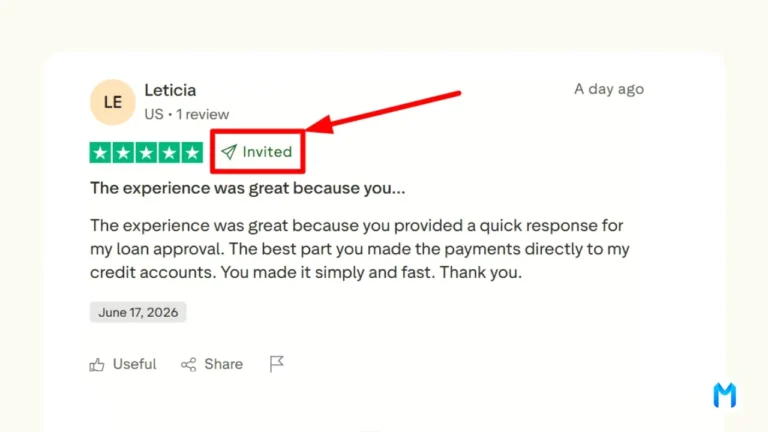
When a review looks suspicious, especially if it is part of a pattern of incentivized or referred reviews (for example, when you actively ask a customer to leave a review), Trustpilot tends to process it as potentially fraudulent and may remove it automatically.
How Trustpilot decides which review is fake (and why it gets it wrong)
Fake review detection on Trustpilot works on two levels:
- The first is an automated process that runs before the review is even published, using systems based on artificial intelligence.
- The second is a manual review carried out by internal teams when a rating is reported.
For example, in 2024, around 90% of removed reviews were detected automatically by its systems, with no human intervention.
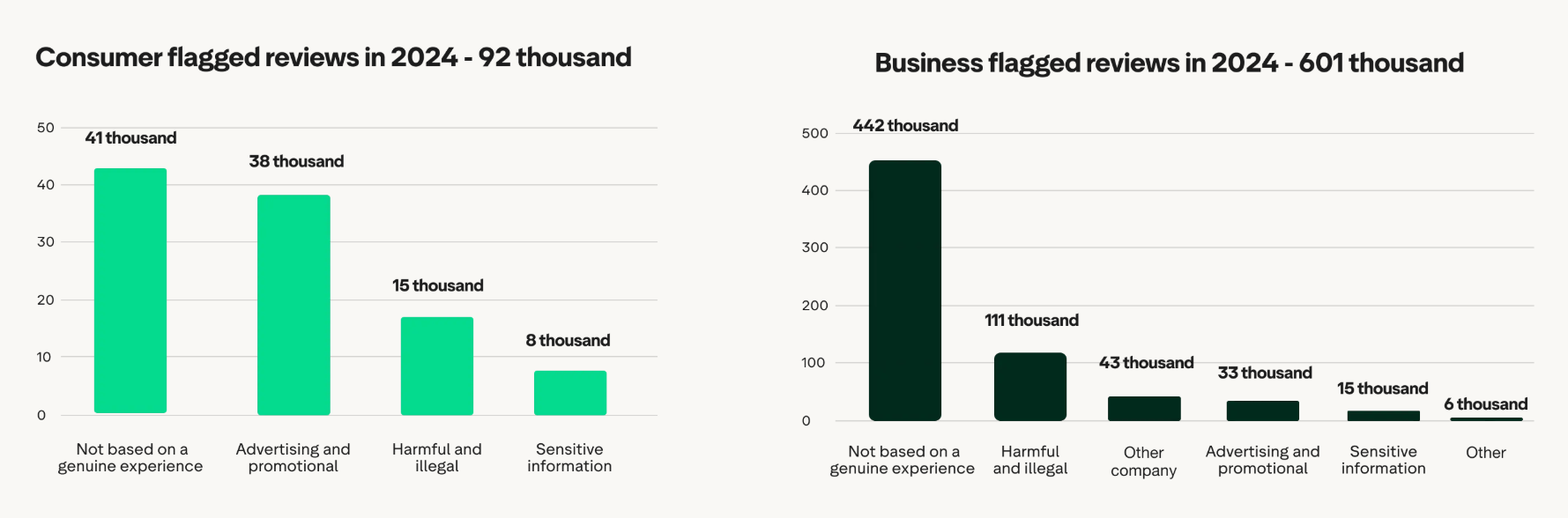
These systems analyze hundreds of signals to determine whether a review looks suspicious, such as:
- Behavioral patterns, like many reviews posted in a short period or several accounts created from the same device.
- Technical data, like IP addresses, geographic location, and timestamps.
- Content signals, like repeated phrases or language that appears to be artificially generated.
- Account history, like new users or profiles with unusual creation patterns.
The problem is that these indicators do not always distinguish users real intent.
If your sales team requests reviews from ten customers on the same day, from the office and using a similar email template, this behavior can look a lot like a fraudulent campaign in the eyes of the algorithm.
When a review moves to manual review, Trustpilot’s content integrity team comes into play, combining human review with automated tools.
Even so, the system is not precise and removes legitimate ratings fairly often, since it operates with a margin of error that the platform considers acceptable.
The origin of the problem: when buying reviews became a dangerous market for Trustpilot
For years there was an open market of fake reviews around the platform.
You only had to search “buy Trustpilot reviews” to find providers selling fabricated positive ratings, often for just a few dollars each.
As a result, many businesses bought these packages to artificially inflate their score, generating fake opinions and accounts that never corresponded to real customers.
The problem grew so large that it pushed Trustpilot to take drastic measures.
What actions did Trustpilot take after this situation?
To fight illegitimate review markets, Trustpilot began investing aggressively in automated detection systems, which led to the suspension of hundreds of thousands of user accounts for breaching its policies, along with legal action against businesses that abused the system.
The problem is that this reaction created a side effect.
To keep fraud from slipping through, Trustpilot tuned its filters toward an extreme that also catches authentic reviews.
As a result, Trustpilot tends to prefer removing legitimate reviews rather than risk allowing manipulation on the platform.
And it is honest businesses that end up bearing that cost.
The current state of review removal on Trustpilot
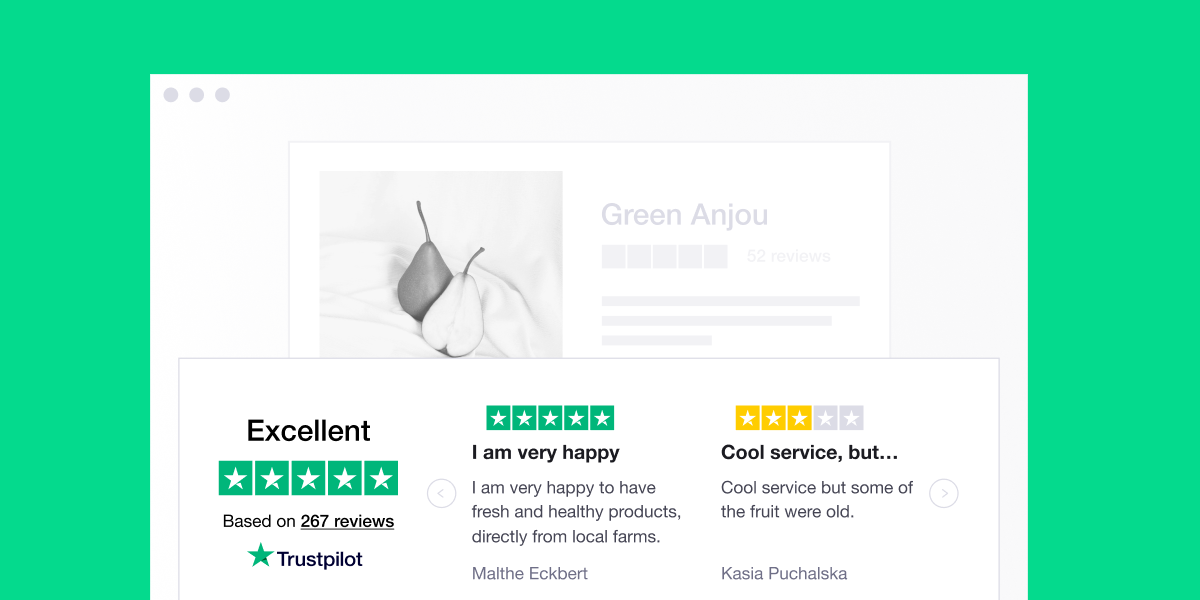
In 2024, Trustpilot removed around 4.5 million reviews that it classified as fake, representing close to 7% of all reviews published that year.
According to its own data, the vast majority of these removals correspond to positive ratings.
The system is mainly designed to detect artificial score inflation, not just attacks or malicious negative reviews.
What to do when Trustpilot removes your legitimate reviews
If you are already losing authentic ratings on your profile, there are several measures that can help you reduce the risk of having real reviews removed.
These are some of the most important ones:
- Space out your review requests instead of asking for many at once on the same day.
- Encourage your customers to write from their own devices and in their own words, not from shared terminals.
- Avoid relying solely on the invitation system if you want to keep more room to maneuver.
- Document your legitimate reviews in case you need to prove to Trustpilot that they come from real customers.
- Report suspicious patterns on your profile with judgment, without overloading the system.
Even when you do everything right, you may still see genuine opinions disappear.
In these cases, knowing the platform’s policies in depth can make the difference between recovering authentic reviews or giving them up for lost.
For this, services specialized in online reputation or in Trustpilot review management can help you, since at Carl Media Removal we know in depth how Trustpilot evaluates each case and how to structure requests in a way that aligns with the criteria the platform actually reviews.
Conclusions on the removal of legitimate reviews on Trustpilot: how can you protect yourself from this problem for good?
That Trustpilot removes a legitimate review does not mean you can’t fix the problem.
In fact, in many cases it can be a sign that you are doing things right, especially if you are receiving genuine positive feedback from your customers.
However, if you are suffering constant removal of legitimate reviews, applying the recommendations in this article can help you reduce this problem significantly.
The most important thing is to act proactively and understand the full logic of Trustpilot, that is, how a rating is born, what factors turn it into something suspicious, and what type of reviews best make it through its filters.
Even so, if you need help with this situation, at Carl Media Removal we can help you solve problems related to the removal of legitimate reviews and keep a strong, positive Trustpilot profile.
You can request a quote with us and we will help you find the best solution to protect, optimize, and strengthen your Trustpilot profile.
 Subscribe to our newsletter
Reputation insights and industry news from the Carl Media Removal team, straight to your inbox. No spam, unsubscribe anytime.